
Hearing scratching or finding droppings in your Columbia, MO home? These signs may point to mice—and why a property-specific rodent plan matters.
As outdoor conditions change, mice may seek dependable food, warmth, and shelter. Buildings provide many hidden spaces that can support rodents without homeowners noticing right away.
Quick Take
As outdoor conditions change, mice may seek dependable food, warmth, and shelter. Buildings provide many hidden spaces that can support rodents without homeowners noticing right away.
In this article
Common signs of mice · Where rodent activity may be hidden · Why mice can be difficult to control · Why exclusion is part of rodent control
Common signs of mice
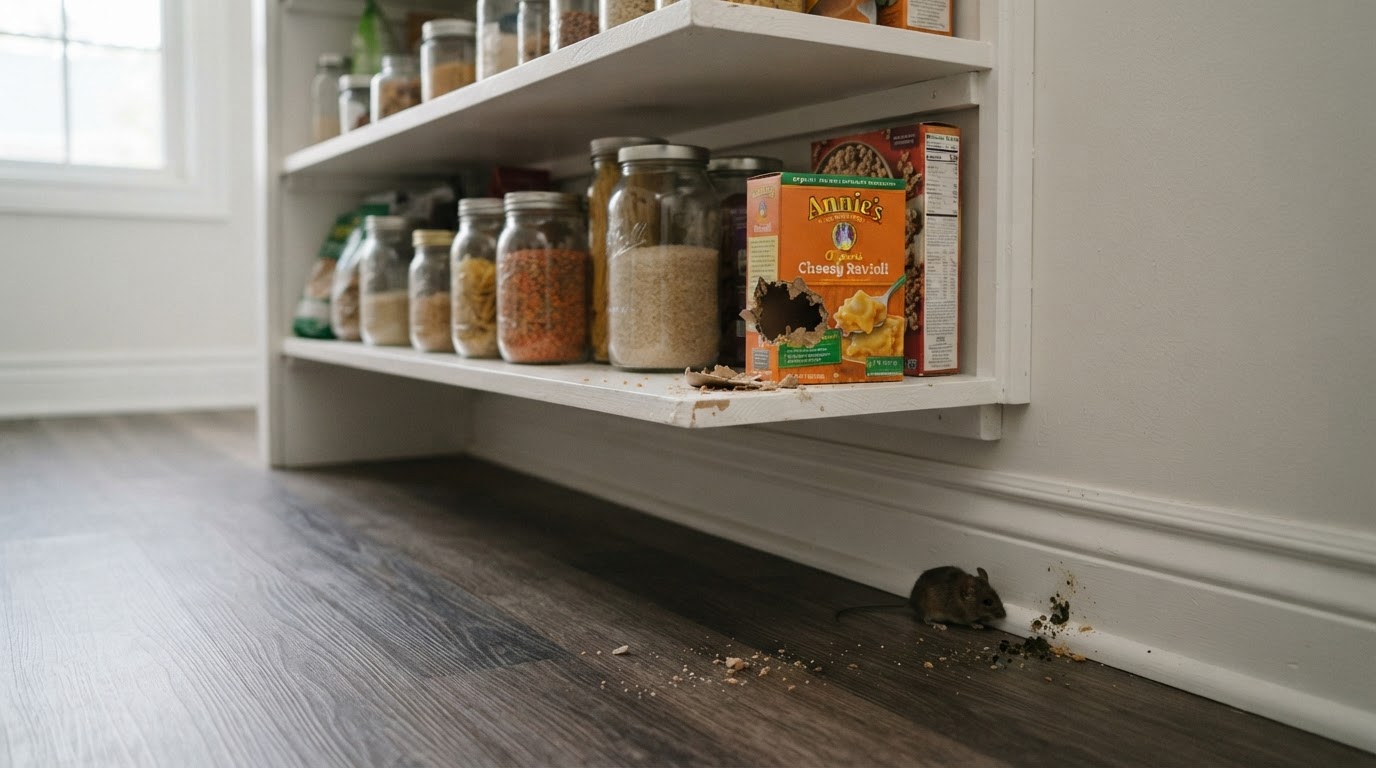
Droppings, scratching sounds in walls or ceilings, gnaw marks, damaged packaging, nesting material, and an unusual odor may indicate rodent activity. Signs can be concentrated near kitchens, storage areas, garages, and utility spaces.
Where rodent activity may be hidden
Mice can travel through wall voids, cabinets, stored belongings, and spaces near plumbing or utility connections. A visible sign may not be close to the nest or entry point.

Why mice can be difficult to control
Rodents reproduce quickly, use hidden routes, and can enter through surprisingly small openings. Removing an individual mouse does not necessarily address the access point or conditions supporting the problem.
Why exclusion is part of rodent control
Professional rodent management may involve assessing activity, identifying access routes, and recommending exclusion improvements. Closing entry opportunities is an important part of preventing repeat problems.

Rodent control for Columbia homeowners
If you’re seeing repeated signs of mice, Preferred Pest & Lawn can help evaluate the activity and discuss pest control and exclusion options for your home.
Why exclusion matters
Addressing rodents inside is only part of the picture if entry opportunities remain. A professional may look for gaps near doors, utility penetrations, foundation transitions, vents, and other openings. Recommendations should fit the building and the opening rather than rely on a generic checklist.
Cleanup considerations
Rodent droppings and nesting material should not be disturbed casually. Avoid sweeping or vacuuming dry material that can raise dust. Keep children and pets away and seek suitable cleanup guidance, especially if contamination is extensive or in hard-to-access areas.
Frequently asked questions
Can mice enter newer homes?
Yes. Rodents can enter buildings of many ages if openings and favorable conditions exist.
What signs should I look for?
Repeated droppings, noises, gnaw marks, food damage, and nesting clues can indicate activity.
What about droppings cleanup?
Avoid stirring up dust or handling droppings directly. Keep people and pets away and seek appropriate cleanup guidance.
Rodent signs can be subtle at first
At first, homeowners may hear a faint movement in a wall or notice a small tear in a food package. Over time, evidence may become easier to spot, but it is better not to wait for widespread signs. If activity is recurring, make a note of the room and time, and avoid disturbing suspected nesting areas.
Why a property-specific plan matters
Rodent control is not simply about responding to one sighting. The layout, surrounding landscape, access points, and food storage conditions all affect what may be happening. A professional assessment can help connect evidence to likely travel routes and determine whether exclusion work should be part of the solution.
Local help from Preferred Pest & Lawn
Our Columbia-area team starts by understanding the pest, the signs you’ve noticed, and the conditions around your property. We recommend a service approach that fits the situation, explain what’s included, and help you know what to expect—without treating every home the same.
Learn more: rodent control services in Columbia.
Need help now? Call Preferred Pest & Lawn at (573) 823-9269 or request service or a quote online. Serving Columbia, Missouri and Mid-Missouri.
Leave a Reply